
Heirloom seed is grown out in batches. When this one is gone it’s gone until the next harvest is germination-tested and packed.
Couldn't load pickup availability


35 hand-selected heirloom seed varieties including tomatoes, peppers, lettuce, kale, basil, cilantro, carrots, radishes, cucumbers, squash, beans, and more. Every packet is individually labeled with variety name, planting depth, spacing, sun requirements, and days to harvest.
Choose your varieties based on your climate zone and available space. Follow the simple planting guide on each packet. Plant in raised beds, containers, window boxes, or directly in your backyard. Water regularly, harvest when ready, and save seeds from your healthiest plants to replant next season — and every season after that.
Most fast-growing varieties like lettuce, radishes, and herbs will sprout within 7–14 days. Tomatoes, peppers, and squash typically take 2–4 weeks to establish strong seedlings. First harvests begin around week 5–8 depending on the variety and your growing conditions.
Many customers report their fullest harvests by the second season, once they've learned their soil and saved seeds from their best plants.
All seeds are sealed in airtight, moisture-resistant pouches designed for long-term storage. Store in a cool, dry place for maximum viability.


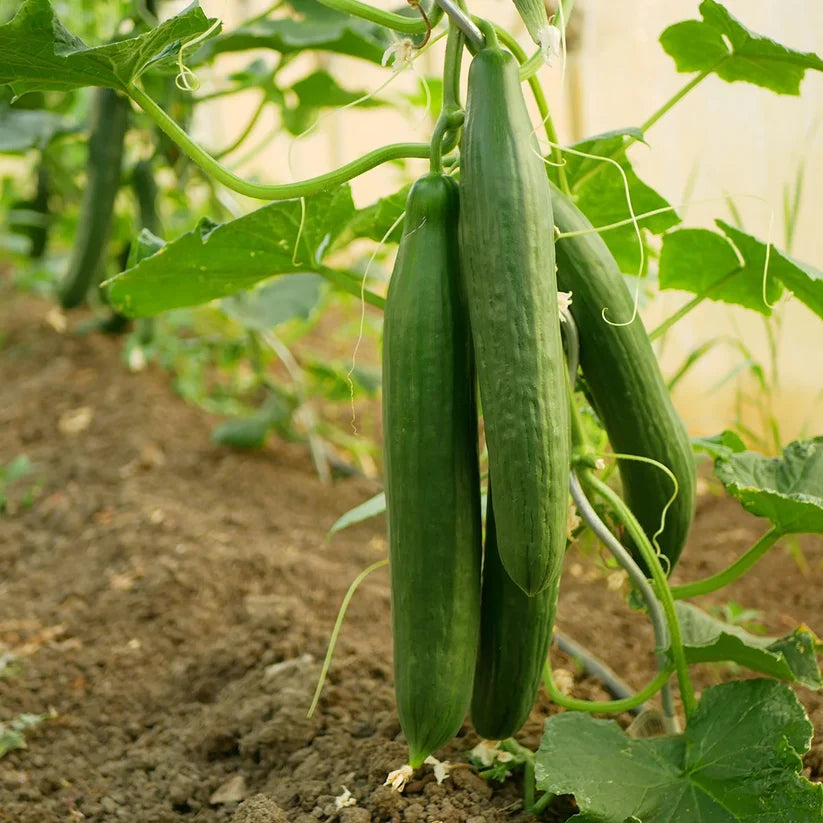
Anyone can write “35 heirloom varieties.” Here is the actual list, by cultivar. Four crops ship as more than one variety — three lettuces, two tomatoes, two radishes, two beans — which is how 30 crops become 35 packets.


Substitutions may occur with harvest availability; any substitute is an equivalent open-pollinated heirloom variety.
Everything in this kit is all you need. Hardiness zones measure how cold a winter gets — which matters for trees and shrubs that have to live through it. Garden vegetables don't: they go in after your last frost and come out before your first. So the zone number isn't what decides your garden. Your frost-free window is.
The Nouri gives you sowing and harvest dates for your own zone, so you're not guessing at the calendar.
You don't wait a whole season to find out whether it worked. The fastest crops are on the table inside 30 days — and by the time the tomatoes come in, you've been eating out of the garden for two months.

Days from sowing to first harvest under typical conditions. Varies with zone, soil, water and weather.
The category is crowded and most of it is decoration. Hobby packets with fifteen seeds in them. Kits labelled for emergencies that turn out to be the same hybrids in a scarier box. Four questions sort it out in about ninety seconds.

Run those four against anything you're considering — including this page. If a seller won't answer all four in writing, before you pay, don't buy it.
Most seed sold through general retail is hybrid. That isn't a scam — it's real plant breeding, bred for a strong uniform first generation. In year one it performs.
Save the seed off that plant and sow it, though, and the traits held together in the first generation come apart in the second. Plants come up stunted, uneven, misshapen. A good share never comes up at all. Growers call it F2 breakdown — the segregation of traits in the second filial generation. It's documented, expected genetics, which is why hybrid seed is sold labelled “F1.”
Nobody had to conspire for this. The incentives did the rest. Every variety in this kit is open-pollinated, so what you save is what you sow.

Hybrid seed is legitimate plant breeding and does its job well in the first generation. The point isn't that hybrids are bad — it's that they're the wrong tool for a household that wants to stop buying seed.
Seed is a small purchase you make forever. Forty to a hundred and twenty dollars a year, every year, for as long as you keep a garden — because hybrid seed can't be saved and replanted.
Open-pollinated seed is a one-time purchase with a maintenance cost of zero. You pay once and harvest your own resupply every autumn.

Based on typical household spend on seed for a full garden. The kit figure assumes you save seed each season, which every variety here allows. Ranges reflect how much you plant.
This isn't a survivalist talking point. It's documented federal policy, run twice inside a single lifetime, because the alternative was families going without.

Farm workers enlisted and European farmland became battlefields. School children, housewives and ordinary citizens were urged to reclaim public parks, school yards and private lots and plant them. By the end of that war the effort had a name: victory gardens.
The USDA put the 1943 figure at 42% of all produce. Seed went out with a booklet that taught planting, harvesting and — the part that mattered — how to save seed so nothing had to be mailed the following year.

★★★★★
For years I tried keeping my grandmother's garden going with seeds from the hardware store. They never worked the same way — things grew differently, tasted different, and I could never save seeds that actually reproduced. Then I found Nouri. First season, everything grew exactly the way I remembered from her garden. The tomatoes, the basil, the peppers — all of it. Second season, I replanted entirely from my own saved seeds and the results were just as strong. I actually got emotional the first time I harvested from seeds I saved myself. This is what real gardening is supposed to be. My grandmother would have loved this kit.

★★★★★
I've wasted more money than I'd like to admit on seed kits from big box stores. Half the packets wouldn't germinate, the instructions were vague, and the varieties felt random — like they just threw whatever was cheapest into a bag. Nouri is completely different. You can tell this was put together by people who actually garden. The varieties make sense for everyday cooking, every packet is clearly labeled, and the germination rate has been outstanding. I've already saved seeds from my first harvest of tomatoes and cucumbers and I'm replanting this spring. This is the last seed kit I'll ever need to buy, and I mean that literally.

★★★★★
We run a small homestead in Kentucky and this kit has become a staple in our operation. All the classic vegetables are included — tomatoes, peppers, lettuce, kale, beans, squash — plus herbs and extras we normally forget to buy separately. The germination rate has been the best we've ever experienced with any seed kit, hands down. What sold us was the fact that every variety is open-pollinated. We saved seeds from our healthiest plants last season and replanted them this year with zero drop in quality. We've since bought three more kits — one for my parents, one for my sister's family, and one for long-term storage.
Most guarantees ask you to decide whether you're happy. This one asks you to run a check — because that's how seed is actually judged, and because we'd rather you found out in week one than in year three.
If the germination doesn't satisfy you — or the kit isn't what this page said it was — email support inside 90 days for a full refund. The manual and the Garden Planner are yours either way.

Before you decide
Most retail seed is hybrid, bred for a strong uniform first generation. Save the seed off it and you hit F2 breakdown: traits segregate, plants come up uneven, and much of it doesn't come up at all — so you buy again next year. Every variety here is open-pollinated. Save it, replant it, it comes back true.
It isn't hard, but it is specific: some crops you take at eating stage, some you let go well past it, some dry on the plant, and a few need washing and a few days of fermenting. The Garden Planner has the schedule crop by crop. That guide is the reason one purchase becomes every year after.
Yes. Hardiness zones measure winter cold, and these crops never see winter — they go in after your last frost and come out before your first. What varies by zone is the length of your frost-free window, and the Garden Planner gives you sowing and harvest dates for yours.
A seed line stored in one place isn't a seed line, it's a box. Roughly a third of orders are three kits — for adult children in other states, for parents, for a sister's household, or simply to keep one sealed while another gets used.
It's built on the assumption you haven't. Planting instructions are printed on every packet, and both guides are written for someone starting from zero. In post-purchase surveys 90% said it was easy with no prior experience. Radishes and leaf lettuce are picking inside 30 days, so you get a result fast.
It's the batch price. Seed is grown out, harvested, germination-tested and packed in dated batches, and each batch is priced to clear before the next grow-out arrives. When this one is gone it's gone until the next harvest is tested and packed, and the price resets with it.
Sealed airtight and moisture-resistant with a 10-year freshness guarantee. Most people shelve it and plant a few packets in the meantime — which is also the smartest way to do it, because a small test bed is how you learn what you're holding.
Every dollar back. You have 90 days: open it, pull three packets, sow a short test bed and count the rows on day eight. If it doesn't satisfy you, email support. You keep both guides regardless.


